01
Dominio
Definí entidades y relaciones alrededor de clientes, sesiones, tareas, documentos financieros y galerías.
Caso de estudio / Producto full-stack
Plataforma de flujo de trabajo para fotógrafos que conecta planificación, CRM, finanzas, entregas y asistencia local con IA sin convertir el proyecto en un SaaS ficticio.
Mi rol
Diseñé y desarrollé el producto completo: interfaz React, API Laravel, autenticación, modelo de datos multiusuario, módulos de negocio, IA local, pruebas y documentación.
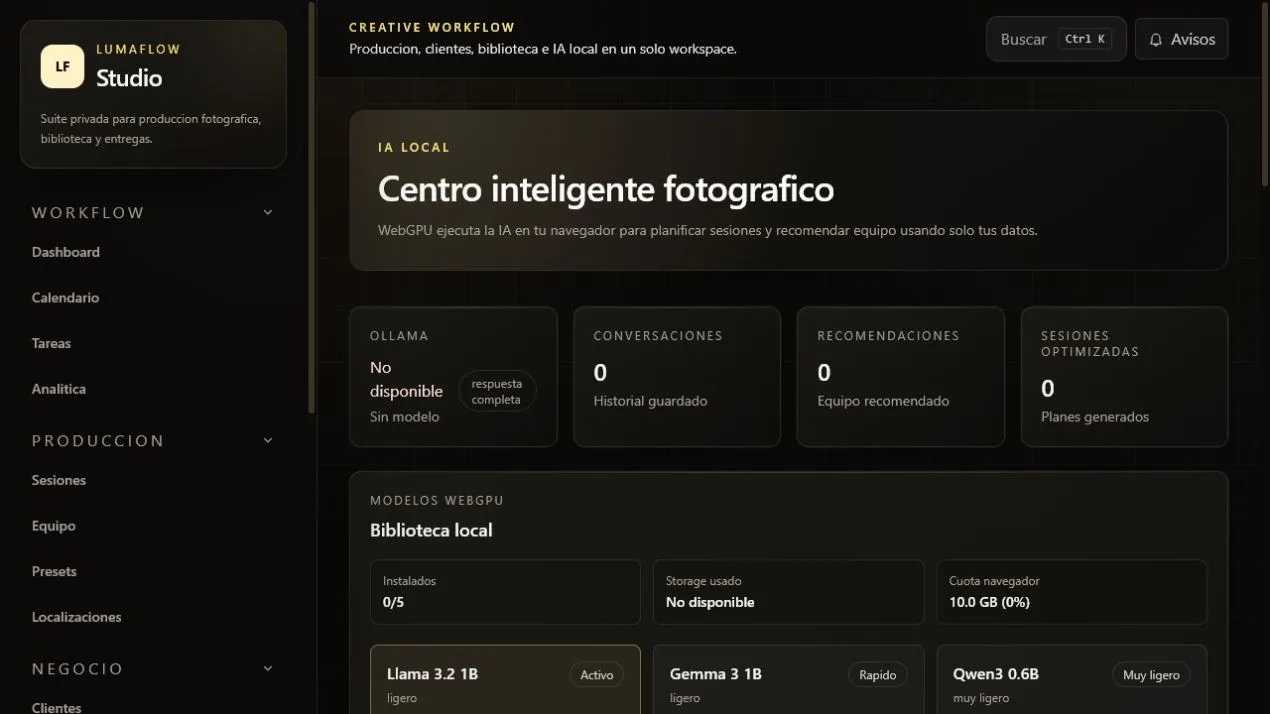
01 / Problema y contexto
Sesiones, clientes, tareas, presupuestos, facturas, localizaciones y entregas suelen vivir en aplicaciones separadas. El objetivo era modelar esas relaciones en un producto evaluable y reproducible, manteniendo privacidad y límites de alcance claros.
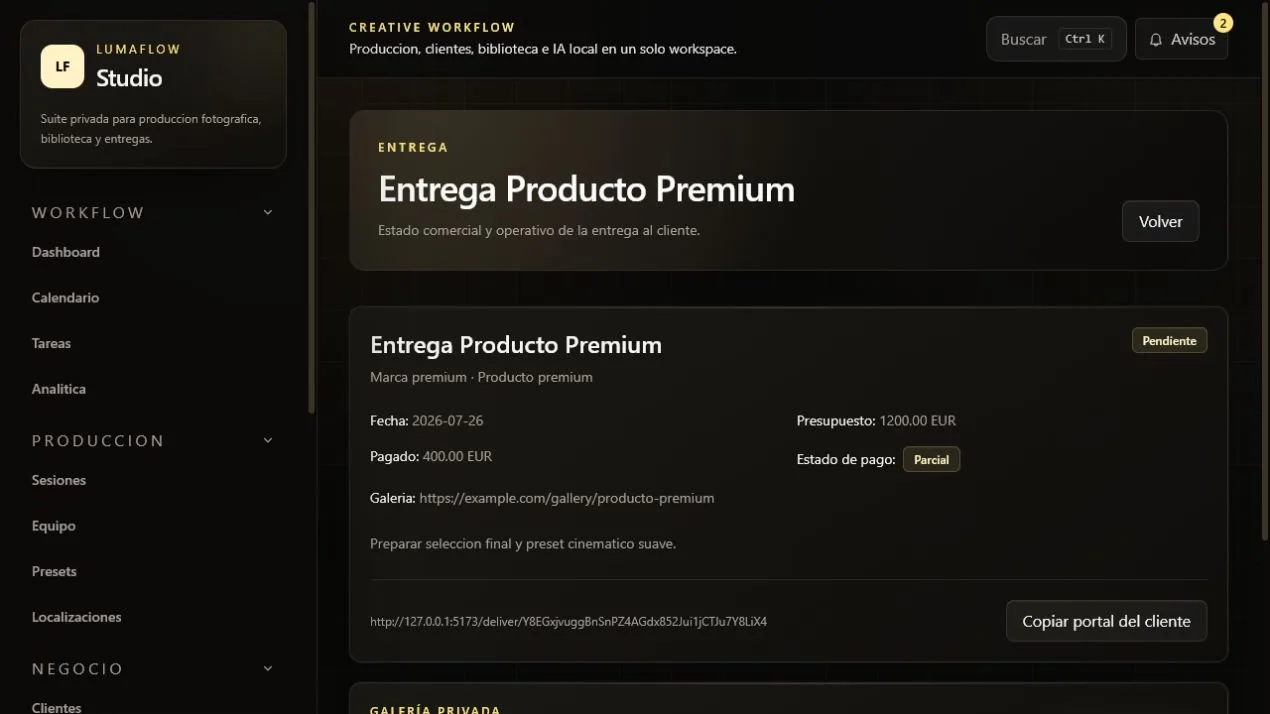
02 / Objetivos
03 / Proceso
01
Definí entidades y relaciones alrededor de clientes, sesiones, tareas, documentos financieros y galerías.
02
Separé frontend y backend por HTTP, con controladores delgados, servicios de dominio, requests y resources.
03
Construí módulos conectados, navegación por teclado, búsqueda global y estados operativos reproducibles.
04
Cerré el producto con tests, Docker, documentación técnica y una lista explícita de funciones pendientes.
05 / Arquitectura
06 / Desafío
Mantener coherencia entre muchos módulos sin convertir controladores, estado o navegación en puntos de acoplamiento difíciles de probar.
07 / Solución
Organicé el código por dominio, separé estado remoto y local, encapsulé reglas en servicios y documenté contratos, instalación y límites del producto.
08 / Resultado verificable
Aprendizajes